Phlebitis Treatment at Home: What Helps, What Doesn’t, and When to See a Vein Specialist
Published 2026-09-11
It is 9 p.m., and the vein along your inner calf has turned into a warm, red, rope-like ridge that hurts when you brush against the sheets. The urgent care closed an hour ago. You want to know what you can safely do tonight.
Most superficial phlebitis does respond to home care, and the right steps are simple. The wrong steps, though, can hide a deeper problem.
Vein specialists at Vein Center Doctor walk patients across New York and New Jersey through this exact evening every week. Here is what they tell them, including the signals that mean home care has reached its limit.
Can Phlebitis Be Treated at Home?
Superficial phlebitis can usually be treated at home with warm compresses, graduated compression stockings, walking, leg elevation, and over-the-counter anti-inflammatories. Home care eases symptoms over one to two weeks. It cannot rule out deep vein thrombosis or fix the faulty vein behind it.
Superficial phlebitis means inflammation of a vein just beneath the skin. Home care cannot see what lies underneath, so a duplex ultrasound is still recommended. That is the step people skip.
Phlebitis rarely appears in a healthy vein, and the tender cord is often the first visible sign of untreated varicose veins.
So the plan has two halves: calm the inflammation tonight, then find out why it happened.
Phlebitis Home Remedies That Actually Help
These six measures carry the weight of mainstream clinical guidance. Most patients feel a difference within two to three days of starting all of them together.
1. Warm compresses, 15 to 20 minutes, three to four times a day. Soak a washcloth in warm (not hot) water, wring it out, and lay it along the tender vein. Warmth widens the surrounding vessels and eases the muscle tension around the cord.
Stop if the skin looks blotchy or blanched afterward.
2. Graduated compression, 20 to 30 mmHg. Knee-high medical compression stockings squeeze hardest at the ankle and less toward the calf. That gradient pushes pooled blood back toward the heart.
Put them on first thing in the morning, before swelling builds, and take them off at bedtime. Pharmacy "support socks" at 8 to 15 mmHg are too light to do this job.
3. Walk, then walk again. Every step squeezes the calf muscle pump, the body's main engine for moving venous blood uphill. Aim for a five-minute walk every hour you are awake.
Seated, pump your ankles up and down twenty times whenever you remember.
4. Elevate your legs above heart level. Lie flat and prop your calves on two or three pillows for 15 minutes, three times a day. Gravity drains the congested vein and takes the throbbing down a notch.
A recliner that leaves your feet below your hips does not count.
5. Over-the-counter NSAIDs. Ibuprofen or naproxen reduces both pain and the inflammation itself, which acetaminophen does not. Take them with food and follow the package dose.
Skip them if you have kidney disease, stomach ulcers, or take a blood thinner. Check with a pharmacist if you are unsure.
6. Keep the area clean and protected. Wash gently with mild soap once a day and leave the skin uncovered. No creams, no adhesive bandages, no scratching.
Intact skin is the barrier that keeps an inflamed vein from becoming an infected one.
Write down the date you start. If the redness has not begun shrinking by day five, that date becomes useful information for your specialist.
What Doesn't Work for Phlebitis (and What Can Make It Worse)
The internet is generous with phlebitis advice. Several popular moves are useless, and a few are risky.
Bed rest. Staying off your feet feels protective, but stagnant blood is exactly what a clot needs to grow. Rest between walks, not instead of them.
Massaging the cord. Rubbing an inflamed vein irritates the vessel wall further. If a clot is sitting inside, pressure can dislodge fragments. Leave the cord alone.
Antibiotics without an infection. Ordinary phlebitis is inflammation, not bacterial infection, so a leftover amoxicillin course does nothing. Antibiotics belong only to septic phlebitis, which is diagnosed by fever, pus, or spreading streaks and treated by a clinician.
Heat on a suspected DVT. Warm compresses are safe for a tender surface vein. They are not safe on a leg that is swollen from the knee down, dusky, or aching deep in the calf.
Those signs belong to a deep vein thrombosis until an ultrasound says otherwise.
Home remedies without evidence. Apple cider vinegar wraps, turmeric paste, essential oils, and cabbage leaves circulate widely online. None has clinical data behind it for phlebitis, and some irritate the skin over the vein. They waste the days when compression and walking would be working.
Aspirin as a "blood thinner." A daily aspirin is not a substitute for evaluation. It does not dissolve an existing clot, and it adds bleeding risk if a clinician later prescribes an anticoagulant.
Warning Signs Home Treatment Is Not Enough
Superficial phlebitis should improve a little each day. These five signals mean stop self-treating and get examined within 24 hours:
- Redness or tenderness spreading beyond the original cord after day three, rather than shrinking toward the vein line.
- Swelling of the whole calf or ankle, not just a puffy area around the inflamed segment.
- Fever over 100.4°F, chills, or drainage from the skin, which point toward septic phlebitis.
- A cord within a hand's width of the groin crease or the back of the knee. Those spots sit beside the junctions where surface veins empty into the deep system, and clots there are managed as deep venous events.
- A second cord appearing elsewhere on either leg.
Call 911 or go to the emergency department immediately for sudden shortness of breath, chest pain that worsens with breathing, a racing heart, or coughing up blood. Those are signs of pulmonary embolism, a clot that has traveled to the lungs.
If none of these apply and the leg is slowly improving, you are probably on track. The sibling guide on how long phlebitis lasts maps the expected day counts.
How Vein Center Doctor Treats Phlebitis Beyond Home Care
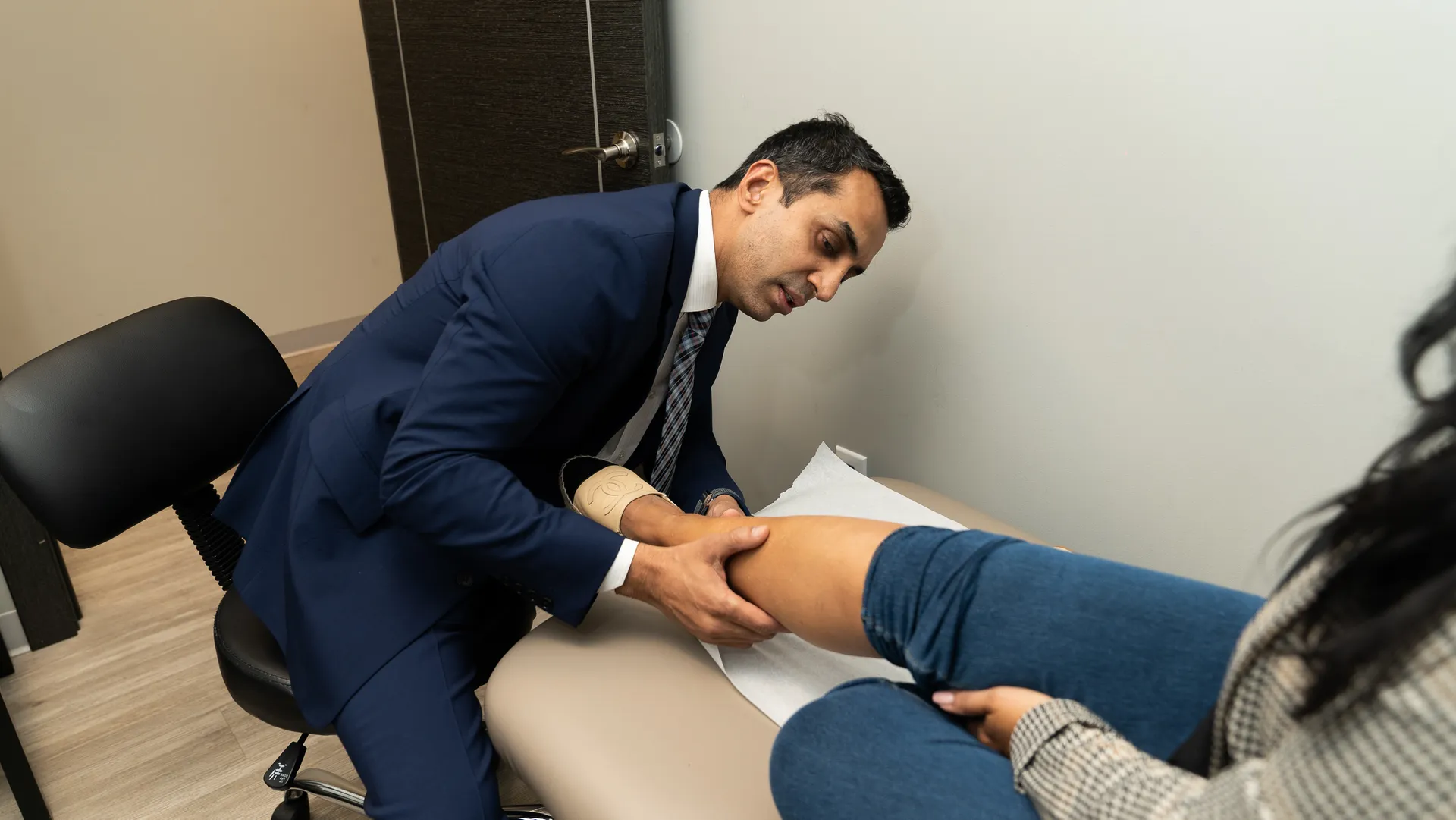
Home care treats the episode. A vein specialist treats the reason it happened, and the first visit answers the question no compress can: is there a clot, and where does it end?
Duplex ultrasound is a painless scan performed in the office. It shows whether a thrombus sits inside the inflamed vein, how far it extends toward the deep system, and which valves are leaking. That reflux map is the blueprint for everything that follows.
For an uncomplicated case, the specialist confirms the home protocol above and adds prescription-grade compression therapy, fitted to your leg measurements rather than a sock-size chart.
Once the acute inflammation settles, usually within a few weeks, the source vein gets closed:
- Radiofrequency ablation uses targeted heat delivered through a thin catheter to seal the refluxing saphenous vein.
- VenaSeal closes the same vein with a medical adhesive, no heat and no tumescent anesthesia.
- Ultrasound-guided sclerotherapy injects a solution into the smaller tributary veins that fed the inflamed segment.
Each procedure is performed in an outpatient setting with walk-in, walk-out recovery. Dr. Rahul Sood, Medical Director at Vein Center Doctor, is triple board-certified and has performed more than 10,000 leg procedures over a career spanning 10-plus years.
Finally, a phlebitis plan that removes the vein producing the problem rather than waiting out one flare after another.
Preventing Phlebitis From Coming Back
Recurrence follows a pattern: the same vein, a few months later. That is because the episode you just nursed was a symptom, and the disease is venous reflux.
Leaking valves let blood pool in a surface vein. Pooled blood stretches the vein wall, slows flow, and sets up the inflammation and clotting you felt as a cord. Until the valve problem is treated, the reservoir stays full.
Movement and compression lower the odds in the meantime. Wear your stockings on flights longer than four hours, on long drives down the Turnpike, and through pregnancy if your specialist recommends it.
And treat the varicose veins. A vein that has already produced one phlebitis episode has declared itself faulty, and sealing it removes the place where the next clot would form.
The broader background is covered in our guide to phlebitis causes, symptoms, and treatment.
Schedule a Free Vein Screening
Vein Center Doctor offers free vein screenings at 12 locations across New York and New Jersey. A board-certified vein specialist scans your leg with duplex ultrasound, confirms whether home care is enough, and treats the reflux behind the inflammation.
Schedule your free phlebitis screening today or call (914) 274-4412. Same-week appointments are available at offices from Ardsley to Edison.