Holiday Meals and Swollen Legs: How Salt Affects Your Veins and What Helps
Published 2026-11-04
It is the morning after the big holiday meal. Your shoes feel tight, and the sock marks dig into puffy ankles. Your legs feel heavy before the day has even started.
If this happens every year, you are not imagining it. Salt and leg swelling go together, and weak veins can make the effect stronger. This guide explains why it happens, what eases it, and when swelling deserves a closer look.
Can Salty Food Make Your Legs Swell?
A high-sodium meal makes the body hold extra fluid. Gravity pulls that fluid down into the lower legs. In people with weak vein valves, called venous insufficiency, blood and fluid pool instead of moving back up, so swelling is more noticeable and lasts longer.
Yes, salty food can make your legs swell. Healthy legs usually settle by the next day. Legs with vein trouble often hold on to the swelling longer.
Why Weak Veins Make Holiday Swelling Worse
Your leg veins carry blood back up to the heart, against gravity. Small one-way valves inside the veins keep that blood from slipping backward.
When those valves weaken, blood flows the wrong way and pools in the lower leg. This is called reflux. It is the core problem in chronic venous insufficiency.
Extra fluid from a salty meal adds volume to a system that already struggles. Pressure in the leg veins rises, and fluid leaks into the tissue around them. The result is swelling in the ankles and calves.
Varicose veins often come from the same valve problem. People who have them commonly notice heaviness, aching, and swelling that builds toward evening.
Patients describe it in plain words. One person asking on VeinDirectory.org wrote, "My ankles are swollen all day, heavy legs, visible swollen vein." A salty holiday meal can turn that feeling up.
For a deeper look at fluid buildup, read our guide on treating edema with venous insufficiency.
What Makes Holiday Weekends Hard on Your Legs
Salt is rarely the only factor. Holidays stack several habits together, and your veins feel all of them.
- Salty foods. Ham, gravy, stuffing, cured meats, cheese boards, takeout, and canned soups are common sources of sodium.
- Alcohol. Drinks can add to dehydration and fluid shifts. They also tend to go with sitting longer.
- Long hours on your feet. Cooking all afternoon keeps blood and fluid pooling in your legs.
- Long hours sitting. Staying at the table for hours slows blood flow in the calves in a similar way.
- Travel. Car rides and flights keep your legs still for long stretches. Read about DVT risk during holiday travel before you go.
- Less exercise. Daily walks and workouts often slip during busy weeks.
- Warm, crowded rooms. Heat can widen veins, which may make swelling easier to notice.
Any one of these is manageable. Together they add up fast, especially when your valves are already weak.
What Helps Swollen Legs After a Salty Meal
Small steps help most people. They do not replace medical care if swelling keeps coming back.
Go easier on the saltiest dishes
You do not have to skip the meal. Take smaller portions of the saltiest dishes, and fill more of your plate with vegetables and fruit. Gravy, cured meats, and canned soups are usually the heaviest in sodium.
Drink water
Water helps your body manage sodium. Sip through the day, especially if you are having alcohol. If you have heart or kidney disease, ask your doctor how much fluid is right for you.
Add potassium-rich foods
Potassium helps balance sodium. Vegetables, fruit, and beans are among the foods that reduce leg swelling for many people.
Check with your doctor first if you have kidney disease or take medicines that affect potassium. Our guide to a healthy diet for varicose veins has more ideas.
Elevate your legs
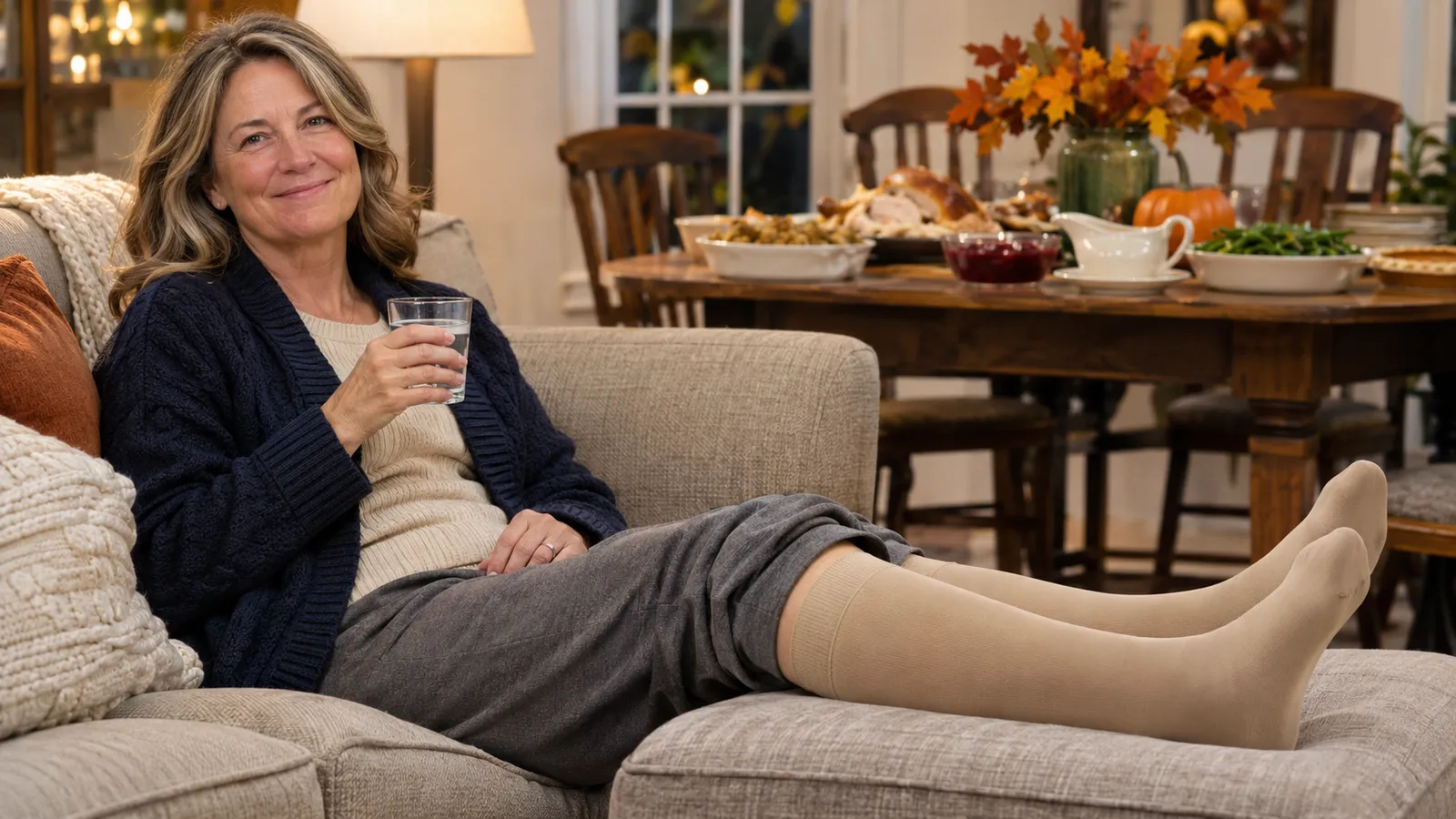
Lie down and raise your legs above heart level for about 15 minutes. Prop them on pillows if needed. Gravity then helps drain fluid out of the lower legs.
Walk and pump your ankles
A short walk after the meal helps your calf muscles push blood upward. Stuck at the table? Point and flex your feet, or draw slow circles with your ankles.
Wear fitted compression stockings
Fitted compression therapy applies gentle pressure that supports your veins and limits fluid buildup. A specialist can check the right strength and fit. Putting stockings on before a long day of cooking or travel can help.
For more on styles, see our post on compression tights.
Skip water pills unless prescribed
Do not take water pills on your own to flush out a salty meal. Use them only if a doctor prescribed them for you.
When to Worry About Leg Swelling
Swelling from one salty meal usually eases once you rest and raise your legs. Get it checked if you notice any of these:
- Swelling that does not go down overnight
- Swelling in one leg only
- Pain, warmth, or redness in the leg
- Skin changes, such as darkening or tightness, or sores that are slow to heal
Swelling in one leg with pain can be a deep vein thrombosis (DVT), which is a blood clot in a deep vein. Seek medical care right away.
Chest pain or sudden shortness of breath can mean a clot has reached the lungs. Call 911.
Swelling in both legs together with breathlessness can involve the heart or kidneys, not only the veins. See a doctor promptly.
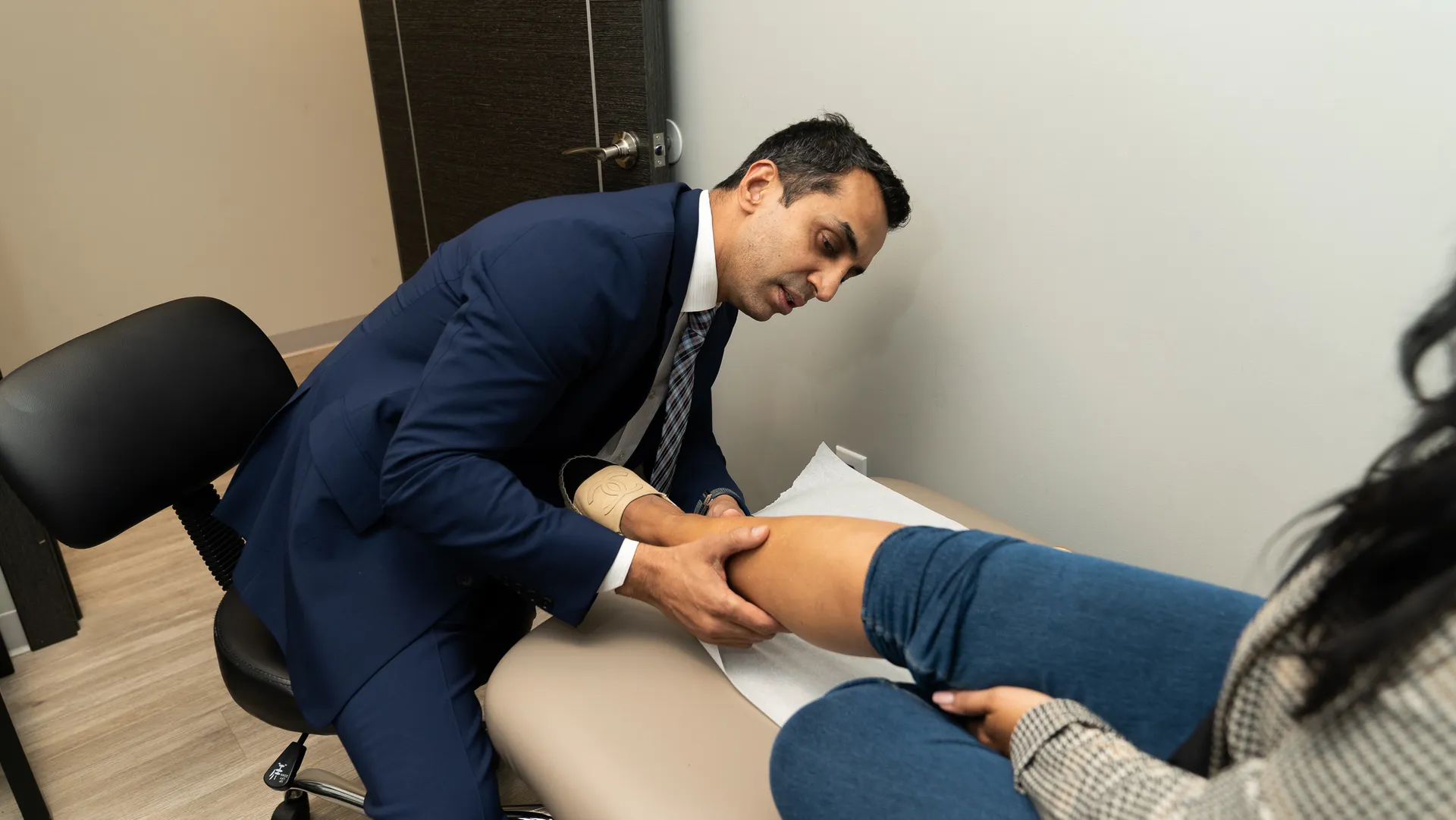
How a Vein Specialist Finds the Cause
If swelling keeps coming back, salt may not be the whole story. Home steps only go so far when the problem sits inside the vein. One person asking online described trying compression socks and other remedies and still feeling pain.
At Vein Center Doctor, new patients get a free vein screening. A duplex ultrasound then checks your leg veins for reflux, meaning blood flowing the wrong way.
Treatment depends on what the scan shows. Options include radiofrequency ablation, VenaSeal, sclerotherapy, and compression therapy. All are minimally invasive and done on an outpatient basis.
We accept most insurance, and our surgical suite is Joint Commission accredited.
Book a Free Vein Screening Before or After the Holidays
Here is the short version:
- Salt makes the body hold water, and gravity sends that fluid to the lower legs.
- Weak vein valves make holiday swelling worse and slower to fade.
- Water, potassium-rich foods, walking, leg elevation, and compression stockings help most people.
- Swelling in one leg, or swelling with pain, warmth, or redness, needs prompt evaluation.
- A duplex ultrasound can show whether vein disease is behind recurring swelling.
Do not let swollen legs become your normal after every holiday. A free screening can tell you whether your veins are involved.
Visit any of our 12 locations across New York and New Jersey. Call (914) 274-4412 or book a free vein screening online.