Blood Clots and Holiday Travel: How to Lower Your DVT Risk on Long Flights and Road Trips
Published 2026-10-01
You are packing for the Thanksgiving flight out of Newark when you remember your aunt's blood clot. Then you glance down at the varicose veins on your calves and wonder whether six hours in a middle seat changes anything.
That question is reasonable, and the answer depends more on your health than on the miles. Vein Center Doctor hears it from New York and New Jersey patients every November. This guide covers who faces higher risk, what lowers it, and which symptoms need care.
Can Flying Cause Blood Clots?
Deep vein thrombosis (DVT) is a blood clot that forms in a deep vein, usually in the leg. Sitting still for more than about four hours slows leg blood flow and raises DVT risk, though absolute risk stays low for most healthy travelers.
The cause is mechanical. Your calf muscles work as a pump, pushing blood back toward the heart each time you walk. When you sit for hours with bent knees, that pump goes quiet and blood moves more slowly through the deep veins.
Slow blood alone does not make a clot. Clots tend to form when slow flow combines with other factors, such as vein wall damage, injury, or blood that clots more readily. That is why two passengers in the same row can face very different risk.
The same logic applies on the road. A long I-95 drive keeps your legs just as still as an airline seat does, so the prevention steps below cover both.
Who Is Most at Risk for DVT When Traveling?
Trip length matters less than your personal health history. These factors raise DVT risk, and a long trip adds to them:
- A past DVT or pulmonary embolism (PE), which is a clot that has traveled to the lungs
- Recent surgery or injury
- Pregnancy and the weeks after delivery
- Estrogen therapy or hormonal birth control
- Active cancer
- Obesity
- Older age
- A known clotting disorder
- Varicose veins or chronic venous insufficiency
One factor does not mean a clot is coming. Several factors together are a reason to talk with your physician before you book the trip.
How to Lower Your DVT Risk on Long Flights and Road Trips
Small habits during the trip do most of the work. Use this checklist on a flight out of JFK or LaGuardia and on a holiday drive alike:
- Pick an aisle seat. It lets you stand and walk the cabin every 1 to 2 hours without climbing over anyone.
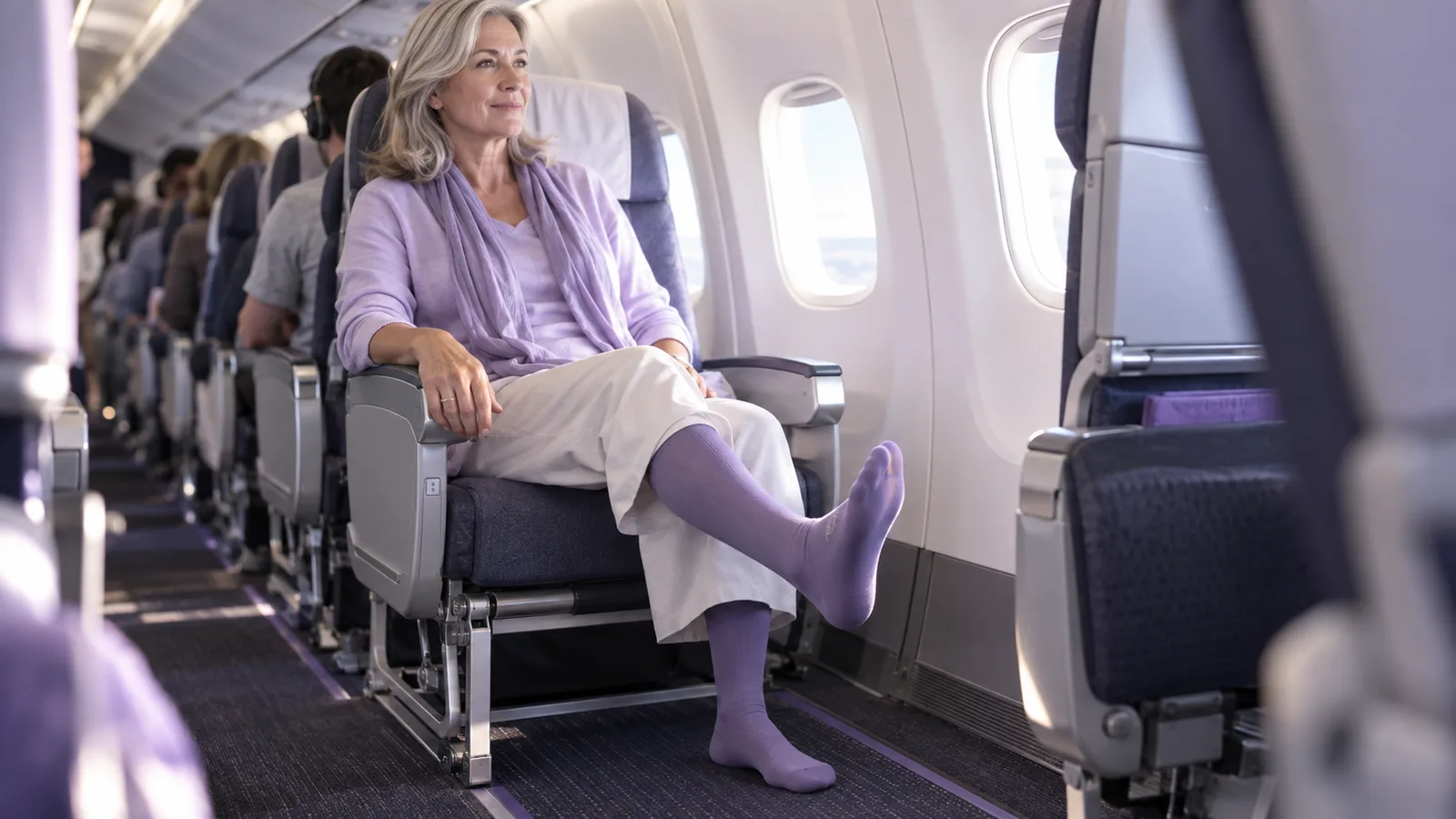
- Move while seated. Do calf raises and ankle pumps by pointing your toes up, then down, whenever you cannot stand.
- Drink water and limit alcohol. Dehydration thickens the problem, and alcohol adds to it.
- Wear loose clothing. Tight waistbands and knee-high cuffs can restrict flow.
- Consider graduated compression stockings. The usual range for travel is 15 to 30 mmHg, and fit matters.
- Stop every 1 to 2 hours on the road. Walk around the rest area on I-95 or the Thruway, even when holiday traffic makes you want to push through.
Stockings work best when sized to your legs, so ask a specialist to measure you rather than guessing at a drugstore size. Compression therapy is a core part of care at Vein Center Doctor.
Blood thinners and aspirin are a different matter. Some high-risk travelers do receive medication for a trip, but that is a physician decision made with your full history in view. Never start either one on your own.
DVT Symptoms After a Flight or Long Drive
A clot can announce itself in the days after a trip and up to about two weeks later. Watch for these signs, especially in one leg:
- Swelling in one calf or leg
- Pain or cramping in the calf or thigh
- Warmth over the area
- Redness or discoloration
One-sided symptoms deserve more attention than symptoms in both legs. Mild swelling in both ankles after a flight is common and often reflects fluid pooling.
Call your physician promptly, or go to urgent care, if you notice these signs. A DVT is treatable when found early.
Call 911 right away for sudden shortness of breath, chest pain, or coughing up blood. These can be signs of a pulmonary embolism, a clot that has reached the lungs. Do not drive yourself.
For a full look at causes and warning signs, read our complete guide to DVT. If you have had a clot before, our article on post-thrombotic syndrome explains the long-term effects.
Varicose Veins and Flying
Varicose veins form when valves inside leg veins weaken, so blood pools instead of flowing upward. Long sitting adds to that pooling. Many people with varicose veins fly without trouble, yet existing venous disease is a recognized risk factor worth taking seriously.
Our article on can varicose veins cause blood clots answers the most common question here. A related mix-up is phlebitis vs. DVT. Inflammation of a surface vein can look similar to a deep clot, though the two are different problems and can occur together.
Consider a vein evaluation before you travel if your legs ache or swell by evening, if veins bulge near the surface, or if the skin around your ankles has changed color. Book it a few weeks ahead so any plan fits your travel dates.
Vein Evaluation and Treatment at Vein Center Doctor
Start with one safety point. If you suspect an acute DVT or PE, seek urgent or emergency care first. A vein clinic appointment is not a substitute for the emergency room.
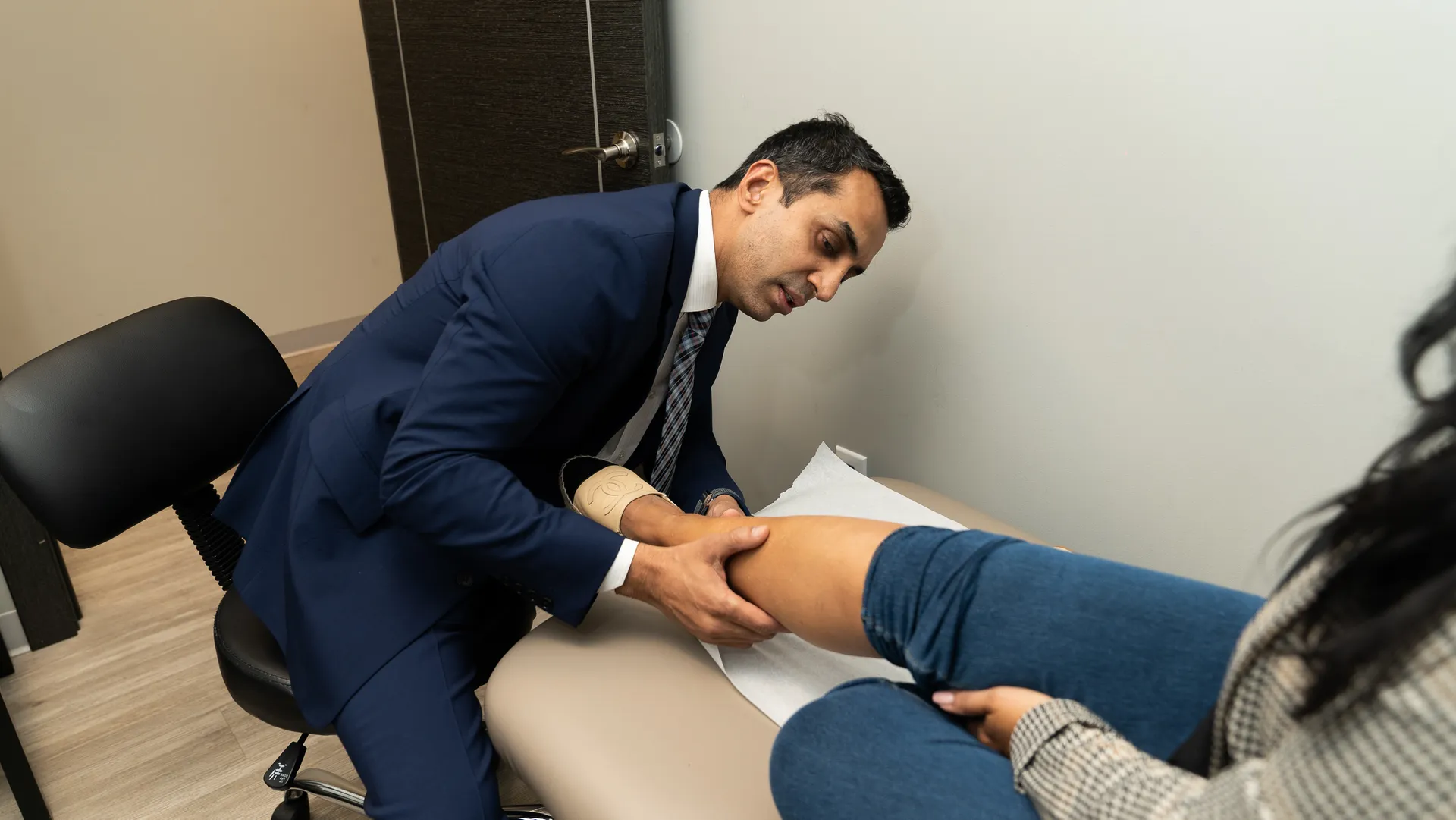
For travelers who are not in an emergency, Vein Center Doctor begins with a duplex ultrasound. This scan uses sound waves to show blood flow and valve function in both the deep and superficial veins of your legs.
When the scan finds venous insufficiency, the team treats it with minimally invasive, outpatient options. These include radiofrequency ablation, VenaSeal, ultrasound-guided sclerotherapy, and compression therapy.
Dr. Rahul Sood, DO, R.PH, the triple board-certified medical director, has performed more than 10,000 vein procedures over a 10+ year career. Treatments take place in a Joint Commission accredited surgical suite.
Treating venous disease does not erase travel risk, so keep using the prevention steps above. What treatment does is address an underlying problem in the leg veins so your legs work better on and off the plane.
Book a Free Vein Screening Before Holiday Travel
Flying out of JFK, LaGuardia, or Newark this season? Vein Center Doctor offers a free vein screening for all new patients, and most insurance is accepted.
You can choose from 12 locations: Ardsley, New City, Middletown, Poughkeepsie, and Staten Island in New York, plus Bayonne, Clifton, Edison, Jersey City, Middletown, Montvale, and Riverdale in New Jersey.
Book a free vein screening or call (914) 274-4412 to pick a location and a date that fits before you leave.