Why March Allergies and Swollen Legs Go Hand in Hand: A
Published 2026-03-02

You might be driving down the Saw Mill River Parkway in early March, watching a faint yellow dusting of oak pollen settle onto your windshield. When you park your car on Ardsley’s tree‑lined streets, your eyes water, your nose runs, and your ankles feel heavy and tight in your shoes. Most people blame the sneezing on the early spring bloom, but they rarely connect the sudden throbbing in their lower legs to the Westchester County pollen count.
The transition from winter to spring in the Northeast is notoriously harsh on the immune system. For active households and busy professionals commuting from the river towns into the city, there is little time to slow down. You might take your daily antihistamine to stop the sneezing, but when that heavy, lead-like feeling creeps into your calves by 3:00 PM, an allergy pill won't save you. Why does this happen? The biological mechanisms controlling your immune response are intimately tied to your circulatory system.
If you already struggle with heavy legs, that seasonal allergic reaction acts as a direct multiplier for underlying circulatory issues. The same biological chemical that makes your eyes water also physically alters the structure of your blood vessels. Our Ardsley, NY vein center serves patients throughout Westchester County to uncover this hidden connection, helping residents achieve lasting relief from complex leg swelling before the spring season peaks.
The Hidden Connection: How Spring Allergies Trigger Leg Swelling
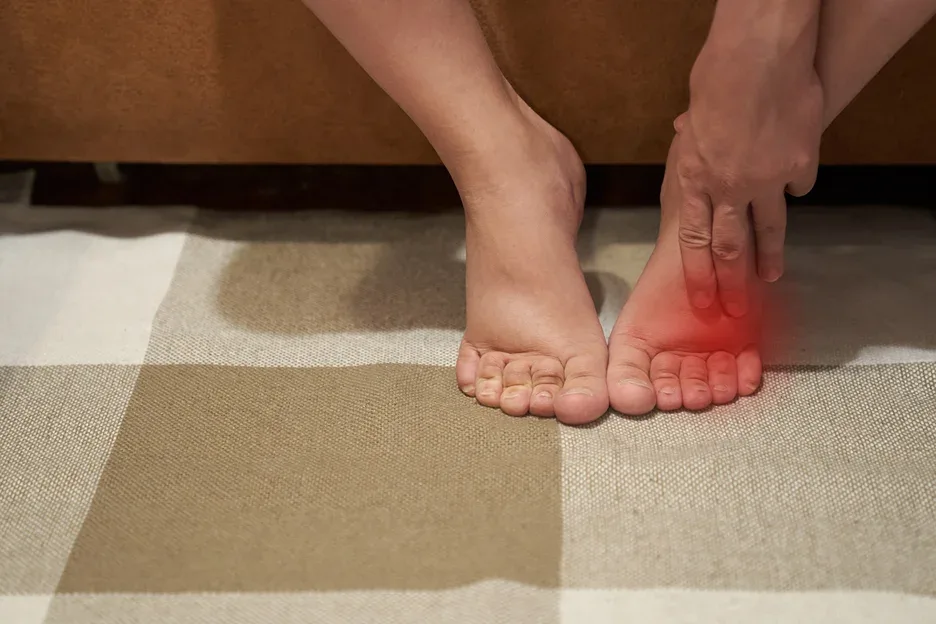
Chronic Venous Insufficiency is a progressive circulatory condition that impairs the upward flow of deoxygenated blood from the lower extremities to the heart. Malfunctioning venous valves cause blood to flow backward and pool, creating elevated venous hypertension. This localized pressure generates persistent leg swelling, skin discoloration, and deep aching pain.
When the dense birch pollen populations across the Hudson Valley begin to bloom, your immune system launches a defense. You inhale microscopic birch pollen. Birch pollen triggers mast cell degranulation. Mast cell degranulation releases a flood of histamine into your bloodstream.
Most allergy sufferers know histamine causes itching, but it also aggressively increases capillary permeability, which essentially means it forces the microscopic walls of your blood vessels to become highly porous. Histamine widens the endothelial gaps in your tiny veins.
These widened gaps allow excess fluid and protein to rapidly leak out of the vascular system and into the surrounding interstitial space. According to physiological data on vascular hyperpermeability, this systemic reaction directly disrupts the endothelial barrier and actively causes localized tissue edema.
When Westchester County Pollen Overwhelms Your Veins
Stop letting a high pollen count dictate your mobility. Vein Center Doctor utilizes advanced diagnostic protocols to identify precisely how systemic inflammation compromises your leg health, allowing you to walk comfortably without that familiar end-of-day throbbing.
If you have perfectly healthy veins, your lymphatic system can efficiently pump that allergy-induced fluid back out of your legs. However, if you are living with untreated chronic venous insufficiency, your circulatory system is already operating at maximum capacity. The damaged, leaky valves in your legs are already struggling to push blood upward against gravity. When a severe spring allergy attack dumps even more fluid into your lower extremities, it completely overwhelms your compromised venous return. The subsequent venous hypertension initiates a circular loop of inflammatory phenomena that potentiates further swelling. The result is rapid, painful ankle swelling that standard allergy medications cannot fully resolve.
For residents walking near Macy Park or commuting along the Saw Mill River Parkway, the sudden shift to spring shouldn't mean a sudden shift to leg pain. However, the combination of standing for long periods and high environmental histamine creates a perfect storm for venous overload.
Diagnosing the True Source of Your Ankle Swelling
It is incredibly common for an Ardsley resident to visit a general practitioner in March complaining of swollen legs, only to be told to take an over-the-counter antihistamine and elevate their feet. While that might temporarily suppress the allergic response, it completely ignores the structural vascular damage driving the bulk of the pain.
Without superficial diagnostic tests that ignore the underlying circulatory failure, our board-certified vascular surgeons perform a comprehensive venous duplex ultrasound.
This specialized imaging allows the medical team to directly visualize the blood flow through your great saphenous vein. The ultrasound technology precisely measures the speed and direction of your blood flow. If the one-way valves inside your veins are failing, the monitor displays a retrograde flow, blood spilling backward down the leg instead of traveling up to the lungs.
When we identify this retrograde flow, we differentiate between temporary allergic edema and chronic venous reflux, ensuring you receive a targeted, permanent solution. Vein Center Doctor maps the exact pressure points so you can definitively reclaim your active lifestyle.
Restoring Your Leg Health with Venous Compression Therapy
Vein Center Doctor delivers immediate stabilization to compromised blood vessels. Once we map your venous architecture, we often implement targeted interventions to counteract the intense hydrostatic pressure pooling in your calves.
Medical-grade compression therapy reduces venous hypertension by applying precise, graduated pressure to the lower leg. This external force acts as an artificial support system for your weakened vein walls. By physically squeezing the expanded vessels back to their proper diameter, the compression tightens the compromised valves and forces the trapped, deoxygenated blood back up toward your heart.
It is important to understand that not all compression garments are created equal. Flimsy, off-the-shelf socks from a local pharmacy often fail to provide the medical-grade tension required to combat true venous reflux. Our specialized compression garments are engineered to deliver maximum pressure at the ankle, gradually decreasing as the fabric moves up the calf. This specific gradient design mimics the natural pumping action of your calf muscle. When combined with our advanced minimally invasive treatments, this therapy profoundly mitigates the compounding effects of springtime histamine release.
Take Action Before the Pollen Peaks
Finally, a vascular surgeon who understands why your seasonal allergies make your legs physically ache. We recognize that treating the whole patient means understanding how local environmental triggers interact with your unique venous anatomy.
Even if over-the-counter allergy pills and generic compression socks haven't worked to reduce your persistent leg pain, a specialized clinical intervention can break the cycle. Our Ardsley clinic specializes in resolving complex circulatory conditions exacerbated by the harsh New York allergy season. We stabilize the vascular endothelium so your legs feel remarkably lighter.
Contact our Ardsley office for a comprehensive venous assessment today. Let us secure your vascular health so you can comfortably enjoy the beautiful Westchester County spring without carrying the burden of heavy, swollen legs.