Radiofrequency Ablation vs. VenaSeal: How to Choose the Right Varicose Vein Treatment
Published 2026-11-04
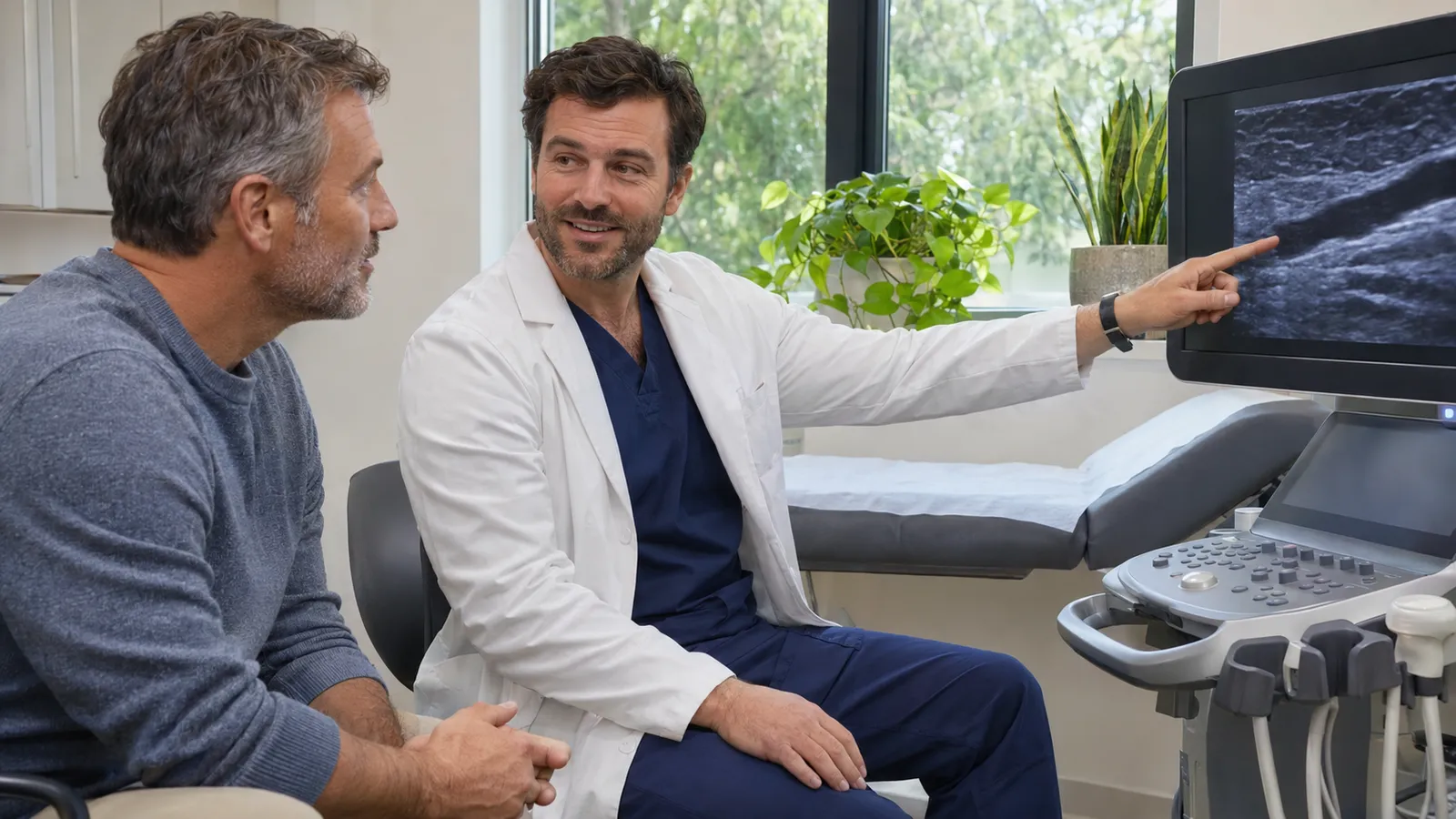
You leave the ultrasound appointment with a diagnosis of reflux and two treatment names to look up. One is radiofrequency ablation. The other is VenaSeal.
Both sound similar, and both close a vein. So which one fits you? One patient asking on VeinDirectory.org wrote, "My venous specialist recently recommended VenaSeal. I'm considering it, but I wonder if I'm jumping the gun." This guide compares radiofrequency ablation vs VenaSeal in plain terms, so you know what to ask.
What Is the Difference Between Radiofrequency Ablation and VenaSeal?
Both treatments close a faulty vein from the inside through a thin catheter, so blood reroutes to healthy veins. Radiofrequency ablation uses heat, with numbing fluid injected along the vein. VenaSeal uses a medical adhesive, with no heat and no tumescent anesthesia.
Both are minimally invasive and done on an outpatient basis. Both treat reflux from varicose veins and chronic venous insufficiency.
Want the bigger picture first? Read why doctors recommend ablation for venous insufficiency.
How Radiofrequency Ablation Works
Radiofrequency ablation closes the faulty vein with targeted heat energy. Here is the usual order of events:
- Ultrasound mapping. Your specialist traces the faulty vein with duplex ultrasound.
- Local anesthesia. A small area is numbed where the catheter will enter.
- Tumescent numbing fluid. Fluid is injected along the length of the vein. It numbs the area around the vein.
- Heat and seal. Under ultrasound guidance, a thin catheter delivers heat that closes the vein.
- Walk out. The visit is outpatient, and you walk the same day.
Compression stockings are usually advised afterward for a short time. Many patients ask about this part, since some find stockings a nuisance.
You may notice bruising or tenderness along the treated leg as it heals. Your care team will explain what to expect in the weeks after. For more, see our post on varicose vein treatment recovery.
How VenaSeal Works
VenaSeal closes the faulty vein with a medical adhesive instead of heat. The steps look like this:
- Ultrasound guidance. Your specialist follows the vein on screen the whole time.
- One numbing injection. A single injection numbs the entry site.
- Adhesive placed. A small amount of medical adhesive is delivered along the vein while pressure is applied. The vein walls seal together.
- Back to normal. Compression stockings are often not needed afterward, and you can return to normal activity right away.
Because VenaSeal uses no heat, it does not need tumescent numbing fluid. That means fewer needle sticks than radiofrequency ablation.
Some people have inflammation along the treated vein. A rare adhesive reaction can also happen. Ask your specialist about both before you decide.
Curious about its history? See the post on VenaSeal FDA approval.
Radiofrequency Ablation vs. VenaSeal Side by Side
| Radiofrequency ablation | VenaSeal | |
|---|---|---|
| Energy source | Heat from radiofrequency energy | Medical adhesive, no heat |
| Numbing | Local anesthesia at the entry point, plus tumescent fluid along the vein | One numbing injection at the entry site, no tumescent anesthesia |
| Needle sticks | More, because of the tumescent fluid | Fewer |
| Compression afterward | Usually advised for a short time | Often not needed |
| Return to activity | Walking the same day, with fast recovery | Immediate return to normal activity |
| Common side effects | Bruising and tenderness | Inflammation along the vein, rare adhesive reaction |
| Insurance coverage | Usually covered when medically necessary, plans vary | Usually covered when medically necessary, plans vary |
Your own recovery plan comes from your specialist. Not sure about coverage? Read whether insurance covers varicose vein treatment.
Which Treatment Is Right for You?
A specialist weighs several things before recommending one option:
- Vein size, shape, and location on the duplex ultrasound
- Allergies
- How well you tolerate compression stockings
- Needle anxiety
- Your work and activity plans
- Insurance requirements
Patients often ask which treatment is better. Both have strong track records, so the answer is individual. Your ultrasound may point toward one option, while your daily life favors the other.
Sclerotherapy may handle remaining branch veins after either treatment. If stockings are part of your plan, our page on compression therapy explains how they work.
Care at Vein Center Doctor
Vein Center Doctor offers both radiofrequency ablation and VenaSeal. That means the recommendation fits your veins, not a single device.
New patients get a free vein screening. A duplex ultrasound maps your veins so your specialist can see where the reflux starts.
Care is led by Dr. Rahul Sood, DO, R.PH, who is triple board-certified and has performed 10,000+ vein procedures over a 10+ year career. Treatments take place in our Joint Commission accredited surgical suite.
We accept most insurance. Our team verifies your coverage before treatment, so you know where you stand.
Book a Free Vein Screening to Find Your Fit
Here is the short version:
- Both treatments close the faulty vein from inside so blood flows through healthy veins.
- Radiofrequency ablation uses heat and numbing fluid. VenaSeal uses medical adhesive with no heat.
- VenaSeal often skips post-treatment compression stockings. Radiofrequency ablation usually includes them for a short time.
- Both are outpatient, and most people walk out the same day.
- A duplex ultrasound and a specialist visit decide which one fits your veins.
The fastest way to learn which option fits is a free vein screening. You leave with answers, not more names to look up.
Visit any of our 12 locations across New York and New Jersey. Call (914) 274-4412 or book a free vein screening online.