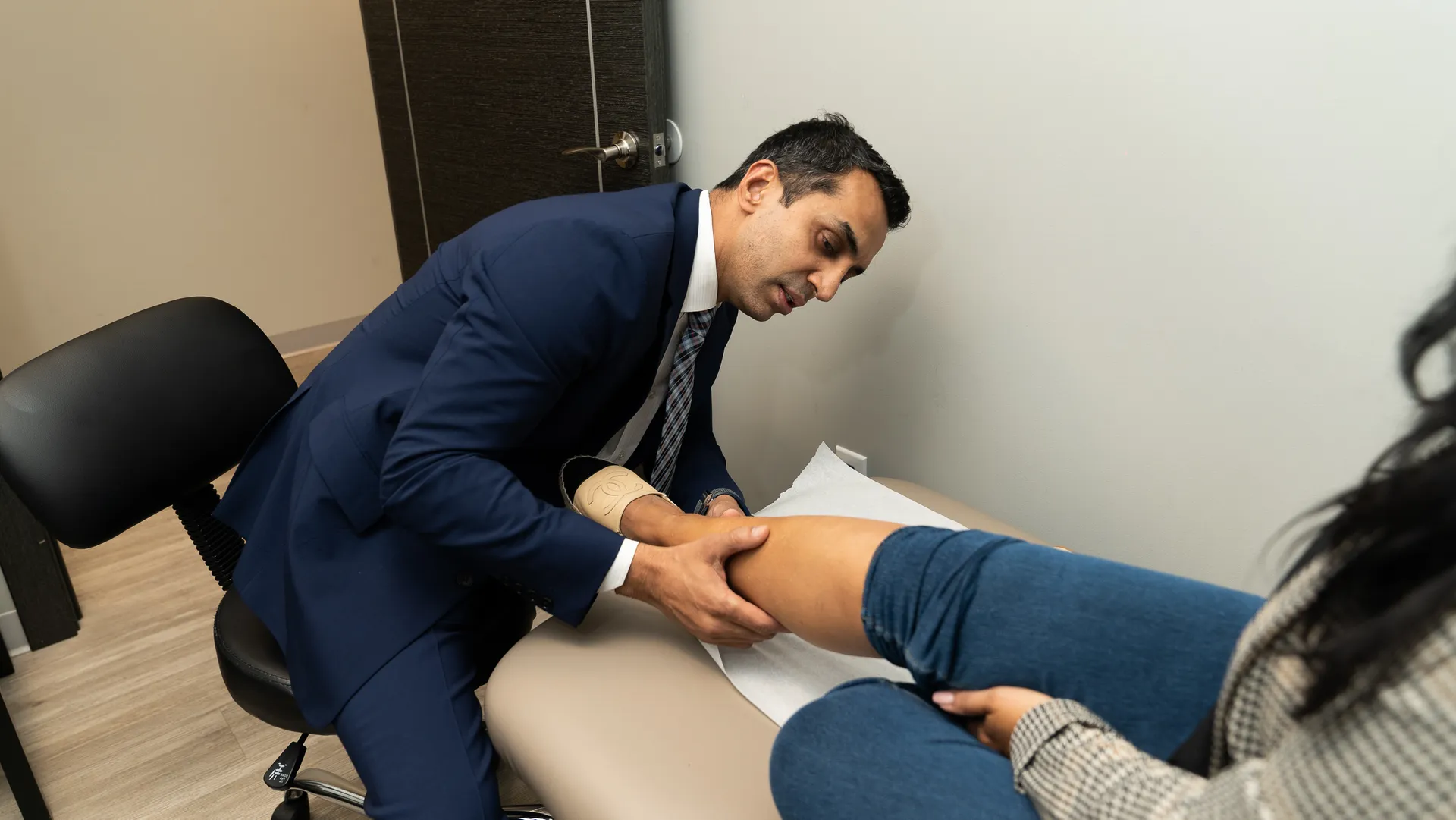
Does Insurance Cover Varicose Vein Treatment? What NY and NJ Patients Should Know Before Year-End
Published 2026-10-01

For years your legs have ached by evening. You assumed vein treatment was cosmetic, and you assumed it would cost too much, so you kept putting it off. Then you open your insurance portal and see that your deductible is almost met.
Does insurance cover varicose vein treatment? For many patients in New York and New Jersey, yes, when the treatment is medically necessary. Vein Center Doctor explains how plans decide, and why timing before January 1 can matter.
Does Insurance Cover Varicose Vein Treatment?
Most health plans, including Medicare, typically cover varicose vein treatment that is judged medically necessary for symptomatic venous disease. Treatment done only for appearance, such as cosmetic spider vein removal, usually is not covered. Coverage rules and requirements vary by plan.
The phrase that decides most claims is medical necessity. Insurers ask whether treatment relieves a symptomatic condition, not whether it improves how your legs look. Medicare applies similar logic, and our article on Medicare coverage for venous insufficiency covers that program.
That is good news if you assumed varicose veins were only cosmetic. Aching, swelling, and heaviness are medical symptoms, and they are the starting point for coverage.
Medical Necessity vs. Cosmetic Treatment
Most plans draw the line at symptoms. Varicose veins that cause problems are treated as a medical condition, while veins that bother only your appearance usually are not.
Symptoms plans usually treat as medical
- Aching or heaviness in the legs, especially by evening
- Swelling in the ankles or lower legs
- Cramping, including at night
- Skin changes near the ankle, such as darkening or thickening
- Open sores called venous ulcers
Appearance-only concerns
Small spider veins with no symptoms are usually considered cosmetic. A visible vein can still be a medical problem when it comes with the symptoms above, and a screening can sort out which category you fall into.
Those symptoms often reflect chronic venous insufficiency, a condition in which valves in the leg veins let blood flow backward. Writing down how symptoms affect your day, such as trouble standing through a work shift, gives your physician useful detail for your records.
What Insurers Look For Before Approving Treatment
Many plans review the same few items. Requirements differ from plan to plan, so treat this list as a general picture and not a rulebook:
- Documented symptoms in your medical record
- A duplex ultrasound showing venous reflux, which is blood flowing the wrong way through a vein
- In some cases, a trial of prescription compression stockings
- Physician documentation of your findings and treatment plan
The ultrasound often carries the most weight because it shows objectively what is happening inside the vein. Vein Center Doctor performs duplex ultrasound vein mapping, and the results become part of your documentation.
Some plans ask you to try compression therapy first, and the length of that trial varies. Ask your plan before assuming a requirement applies to you.
Which Varicose Vein Treatments Are Usually Covered
When medically indicated, many plans cover these minimally invasive, outpatient treatments:
- Radiofrequency ablation uses heat from radiofrequency energy to close a diseased vein so blood reroutes through healthier veins.
- VenaSeal closes the vein with a medical adhesive.
- Ultrasound-guided sclerotherapy injects a solution into the vein while ultrasound shows the needle's path.
Cosmetic sclerotherapy for spider veins is usually self-pay. Medicare draws a similar line, and our article on does Medicare cover spider vein treatment walks through it.
Coverage varies by plan, so confirm yours before you schedule. Your plan, not the clinic, decides what it pays for.
Why Year-End Timing Can Matter
Fall and early winter can make financial sense for some patients. Consider these points:
- Your deductible and out-of-pocket maximum may already be met for the year.
- FSA and HSA deadlines may apply, so check your plan's rules.
- Outpatient recovery can fit around holiday time off, since these treatments are minimally invasive.
On calendar-year plans, your deductible resets on January 1. If you have already paid most of it, treatment this year may lower what you owe out of pocket.
Savings depend on your plan, so treat this as something to check, not something to count on. Starting a screening in October or November leaves time for coverage verification, any needed approval, and scheduling before the year ends.
How Vein Center Doctor Handles Coverage
Surprise bills are a real worry for vein patients, and that worry is fair. Vein Center Doctor accepts most insurance, and the team has insurance-navigation expertise. It verifies your coverage before treatment begins, so you know what to expect before you commit.
Every new patient receives a free vein screening. That visit gives you a specialist's view of your symptoms and your options, with no pressure to book treatment.
Dr. Rahul Sood, DO, R.PH, the triple board-certified medical director, has performed more than 10,000 vein procedures over a 10+ year career. Treatments take place in a Joint Commission accredited surgical suite.
Four Steps to Check Your Coverage
Do these before you schedule, and bring the answers to your screening:
- Call the member services number on your insurance card.
- Ask whether prior authorization is needed for varicose vein treatment.
- Ask where you stand on your deductible and your out-of-pocket maximum.
- Gather notes on your symptoms and any past conservative treatment, such as compression stockings.
The Vein Center Doctor team can walk through these questions with you and verify coverage before treatment. For a broader look at expenses, see our article on the cost of venous insufficiency treatment.
Book a Free Vein Screening and Coverage Check
Vein Center Doctor offers a free vein screening for all new patients at 12 locations: Ardsley, New City, Middletown, Poughkeepsie, and Staten Island in New York, plus Bayonne, Clifton, Edison, Jersey City, Middletown, Montvale, and Riverdale in New Jersey.
Book a free vein screening or call (914) 274-4412, and ask for a coverage check before you decide on treatment. Starting this fall leaves time to verify your coverage and, if treatment is recommended, schedule it before the year ends.